Octordle

























.png "Impossible Tic Tac Toe")


Octordle challenges your brain with eight-word puzzles in a single game. The goal is to improve your vocabulary, thinking skills, and brain training.
Introducing Octordle
Start your daily word puzzle game inspired by Wordle, challenging players to solve multiple hidden five-letter words simultaneously. It's designed as a more advanced version of Wordle, increasing the difficulty by requiring players to manage multiple grids at once while still following the same logic-based guessing system.
Game Concept and Structure
In Octordle, players must solve eight different words in a single session. All words are different and must be guessed within a limited number of attempts. This structure makes the game more complex than traditional Wordle because each guess affects all boards at once. Players need to balance their attention across multiple puzzles while maintaining accuracy and efficiency in each move.
How to Play Octordle
Basic Rules
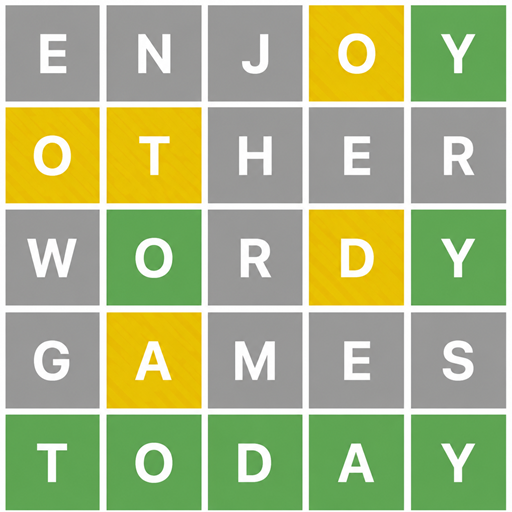
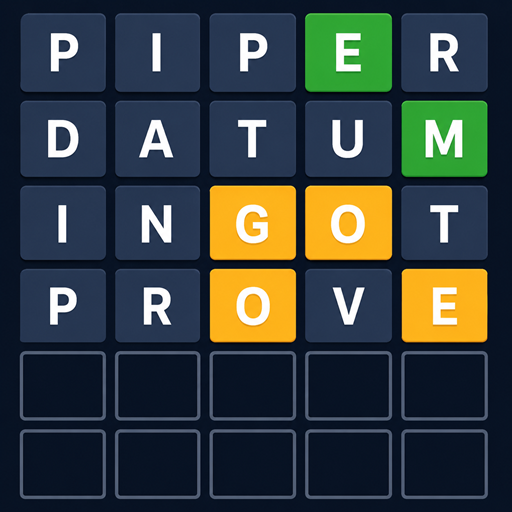
Players enter valid five-letter words and submit them across all eight boards simultaneously. After each guess, the boxes change color to indicate correct letters, misplaced letters, or incorrect letters. Green means the correct position, yellow means the correct letter is in the wrong position, and gray means the letter is not in the word. These hints help players gradually narrow down the possible answers.If you enjoyed Octordle, you might also want to explore Hurdle, another daily word challenge that tests your vocabulary, logical thinking, and guessing abilities in a similar but more focused style of gameplay.
.png)
Enter the correct letters to complete the word
Number of attempts and winning conditions
Each Octordle game gives players a total of 13 guesses to complete all eight hidden words. A new puzzle is given each day, creating a continuous daily challenge. Players win by correctly identifying all eight words before running out of guesses. Inefficient use of guesses makes it difficult to complete all the boxes on time.
Effective word-solving strategies
- Strong opening words with diverse vowels and consonants reveal useful patterns early on.
- Avoid focusing on only one box and instead distribute your guesses evenly.
- Tracking letter frequency across all grids improves efficiency and reduces wasted attempts.